How Much Does a Virtual Production LED Wall Cost in 2026?
Содержание
The honest answer is that a virtual production LED wall does not have one clean price. Two studios can ask for the same wall size and end up with very different quotes because the camera, content engine, ceiling, floor, and support plan change the system.
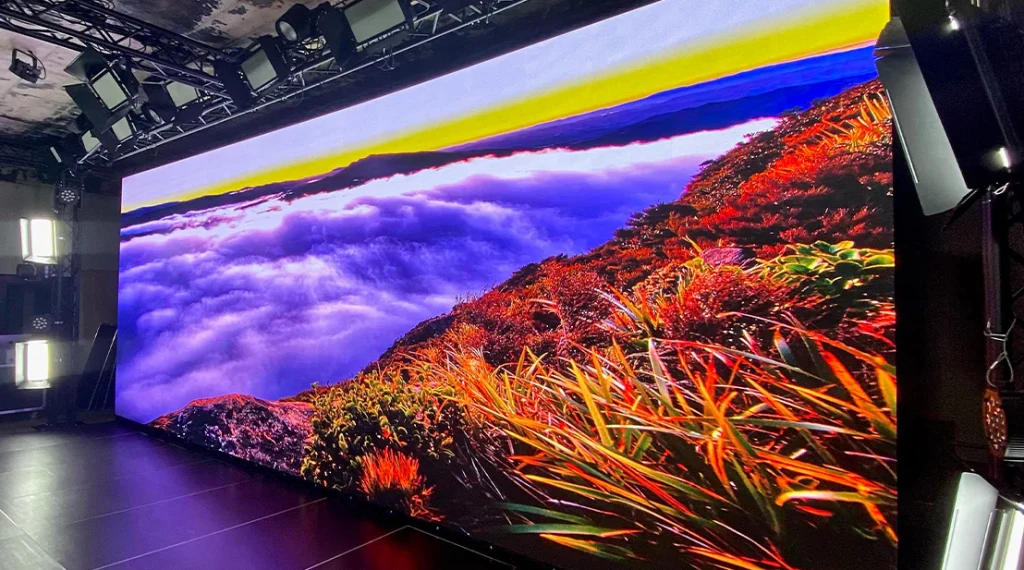
A virtual production LED wall is a display surface used as an in-camera background for film, broadcast, advertising, or xR work. Unlike a presentation screen, it has to perform for both the human crew and the camera sensor.
Panel Cost Is Only the First Line
The LED panels matter, but they are not the whole budget. A real quote may include processing, receiving cards, rigging, structure, power distribution, spare panels, calibration, control systems, installation labor, and training. If the stage needs curved walls, ceiling panels, or floor LED, the design becomes more specialized.
SMPTE’s work in motion imaging standards is a reminder that production environments depend on predictable timing, color, and signal behavior. In practice, that means the wall must be planned with cameras, lighting, tracking, and playback systems in mind. A screen that looks good in a lobby may not be suitable for in-camera visual effects.
Camera-Facing Specs Matter
Virtual production buyers often focus on pixel pitch, refresh rate, scan behavior, color performance, and viewing angle. Those details affect moire, banding, color shifts, and how close the camera can work to the wall. The correct choice depends on lens package, shot distance, frame rate, content type, and how the stage will be used.
That is why virtual production LED wall panels should be evaluated with test footage whenever possible. A spec sheet narrows the field, but a camera test answers questions that a PDF cannot.
Rental, Permanent, or Hybrid?
A permanent studio needs repeatability and service access. A rental stage may need fast setup, durable cabinets, and flexible geometry. A hybrid corporate studio may care more about broadcast interviews, webinars, and product demos than full cinematic volume work.
The cost conversation should also include downtime. If one module fails during a shoot, who replaces it? If calibration drifts, who corrects it? If the production team changes cameras, who validates the wall again? Those support questions are not extras. They are part of the real cost of ownership.
Content production is another line item. A virtual wall is most useful when the creative team can feed it properly prepared environments, plates, or real-time scenes. Unreal Engine operators, media servers, color workflows, and previsualization can all affect the budget. Buying the wall without funding the content pipeline is like building a stage with no lighting plan.
The room itself can also drive cost. Ceiling height, floor loading, acoustic treatment, HVAC, cable paths, camera tracking, and safe access around the volume may need work before the first panel is installed. These items are less exciting than panel specs, but they shape whether the studio runs smoothly.
The best first step is to define the work the wall must support: interviews, car plates, product spots, music videos, xR events, or full narrative scenes. Once the use case is clear, the budget can be built around performance needs instead of wishful thinking.